Faculty

Associate Chair for Academic Affairs
Undergraduate
- Numerical Methods for Chemical Engineers
- Plant Economics
- Plant Design
- Thermodynamics
- Statistical Methods in Chemical Engineering (senior elective)
- Statistical Quality Control Methods (senior elective)
- Seminar (written and oral presentations for chemical engineers)
- Process Control
- Introduction to Computing
- Introductory lecture on Energy
Graduate
- Mathematical Methods in Chemical Engineering
- Advanced Process Control
- Natural Gas Monetization
Teaching philosophy
It is rather well accepted, that the teaching of chemical engineering is at a stage of evolution, due to two factors:
- Recent advances and broadening of chemical engineering science and technology.
- Developments in teaching technology, in part owed to new capabilities of electronic media.
Academia needs to constantly assess, and possibly improve, what and how to teach. Improvements may be realized in two ways: Step changes, e.g. new courses, and gradual modification of existing courses.
What and how to teach
The scope of academic teaching is clear: Teach the fundamentals, so that students can later learn on their own as well. From that point of view, current chemical engineering curricula have well known strengths, such as breadth and flexibility. However, industrial relevance is of paramount importance for consolidating the fundamentals. My activities related to teaching include the following:
- Communication with the Dept.’s industrial advisory council. Responding to their suggestion, I developed the statistical process control (SPC) part (50%) of a new undergraduate course. I also developed an undergraduate course on Statistical Methods in Chemical Engineering.
- Interaction with students and colleagues. Within the Chemical Engineering Dept., I chair curriculum committees that biannually critique the content of each course (rather than the instructor), for consistency, continuity, and continual improvement.
- Incorporation of widespread recent chemical engineering discoveries in undergraduate courses, and consolidation of research results into graduate courses (e.g., graduate course on Advanced Control, new computing methodologies and software tools).
- Incorporation of practical experience (e.g., consulting) in course material.
- Use of modern instructional media (e.g., interactive presentation of PC graphics during lecturing).
- Participation in engineering education seminars and conferences (e.g. ASEE Annual Meeting).
- Study of relevant literature on the teaching of engineering.
Undergraduate research
Our group has advised over a dozen undergraduate students, a number of whom have continued with graduate studies.
Hard to define yet easy to recognize, intelligence as a feature in the design and/or operation of engineered systems is highly desirable and increasingly possible. Whether one deals with a chemical plant, hydrocarbon production, snack food production, microchip fabrication, or a medicated human patient, intelligent design and operation of a system offers distinct advantages, ranging from safety, quality, reliability, performance, and return on investment. Computer software and hardware (from a simple chip to a full computer) and their interaction with humans are at the heart of intelligent operations. The ubiquitous concept of feedback is a basic underlying principle. While the computer is the “brains”, all elements of a feedback loop (including sensors, actuators, and transmission / communication lines) are important and have experienced unprecedented advancement in recent years. In this context, our research aims at the development of
- new fundamental methods for the solution of broad classes of intelligent design and operation problems, and
- solutions for specific problems of real-world importance.
There are several tools of quantitative analysis employed by our group, including mathematical modeling, optimization, statistics, and feedback control. In addition, domain expertise in the various fields where we conduct our research is of paramount importance. As a consequence, our work has a strong interdisciplinary flavor and often builds on collaboration with investigators from both chemical engineering and other fields. Solutions proposed by our work are tested using computer simulations, laboratory experiments, or full-scale tests. Examples of on-going research areas include the following:
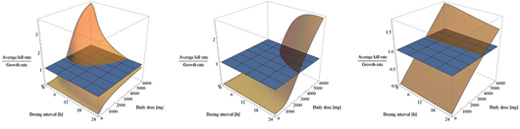
- Effective development and use of antibiotics: How can clinical practices be designed that maximize the killing effect of antibiotics on infectious bacteria while minimizing toxicity for human patients?
- Development of sustainable energy solutions: Generation of clean energy and storage of available energy are two key issues
Our collaboration with field practitioners is an essential element in our quest for fundamental solutions to problems or relevance to the real world. Many of our students conduct part of their research at real-world collaborator sites—both in the Houston area and elsewhere—a practice that offers many clear benefits to all parties involved. Over 25 Ph.D. students graduating from our group have landed successful careers in diverse industrial areas, such as oil and gas, refining, chemicals, semiconductor, engineering design, food processing, and pharmaceuticals, as well as in academia.
2019 Fluor Award, Highest distinction of Cullen College of Engineering
2017 Duckler Award, Cullen College of Engineering Alumni Association
2010 Cullen College of Engineering Senior Faculty Research Excellence Award
2008 "Professor Solution" in "Automation Avengers" educational campaign, ISA
2007 CAST Directors Poster Paper Award (with M. Darby), AIChE Annual Meeting
2007 Top 2% Reviewer, Automatica (leading int’l journal on automatic control)
2007 Cullen College of Engineering Teaching Excellence Award
2005 3rd place, Keck Center Annual Research Conference Poster Contest
1996, 1997 TEES Fellow, Texas A&M
1994 Professor of the Year, Texas A&M AIChE Student Chapter
1992 Junior TEES Fellow, Texas A&M
1988 Teaching Assistant of the Year, UCLA
- Tam, V. H., and M. Nikolaou, MODELING OF MICROBIAL (TUMOR) ADAPTATION TO ANTIMICROBIAL (CYTOTOXIC) AGENTS, D6678PCT; PCT/US2006/036458Date: 01/01/2013
- Gerardo Mijares; Alejandro Garcia; Sathish Sankaran; Jose Rodriguez; Luigi Saputelli; Ankur Awasthi; and Michael Nikolaou, SYSTEMS AND METHODS FOR OPTIMIZATION OF REAL TIME PRODUCTION OPERATIONS, 20090157590Date: 05/01/2009
- Economides, Michael J.; Deeg, Wolfgang F. J.; Valko, Peter; Nikolaou, Michael; andSankaran, Sathish, Method for stress and stability related measurements in boreholes, U.S. Patent 6,834,233, 2004
Selected Publications
- Nikolaou, M. and V.H. Tam, Rapid In Vitro Assessment of Antimicrobial Drug Effect Bridging Clinically Relevant Pharmacokinetics: A Comprehensive Methodology. Pharmaceutics, 15(6): p. 1671. https://doi.org/10.3390/pharmaceutics15061671 , 2023
- Singh, G., M.A. Orman, J.C. Conrad, and M. Nikolaou, Systematic design of pulse dosing to eradicate persister bacteria. PLoS Computational Biology, 19(1): p. e1010243. https://doi.org/10.1371/journal.pcbi.1010243, 2023
- Nikolaou, M., Ziegler and Nichols meet Kermack and McKendrick: Parsimony in dynamic models for epidemiology. Computers & Chemical Engineering, 157: p. 107615. https://doi.org/10.1016/j.compchemeng.2021.107615, 2022
- Nikolaou, M., Revisiting the standard for modeling the spread of infectious diseases. Scientific Reports, 12(1): p. 7077. https://doi.org/10.1038/s41598-022-10185-0, 2022
- Zeinali, L., C. Ehlig-Economides, and M. Nikolaou, Enhanced Geothermal System Model for Flow through a Stimulated Rock Volume. in SPE Annual Technical Conference and Exhibition. https://doi.org/10.2118/205967-MS, 2021
- Alwarda, F., G. Liu, M. Nikolaou, and C. Ehlig-Economides, Automated Procedure for Quantifying ISIP and Friction Losses from Stage by Stage Hydraulic Fracture Treatment Falloff Data. in SPE Annual Technical Conference and Exhibition. https://doi.org/10.2118/201488-MS, 2020
- Darby, M.L. and M. Nikolaou, MPC: Current practice and challenges. Control Engineering Practice, 20(4): p. 328-342. https://doi.org/10.1016/j.conengprac.2011.12.004, 2012
- Darby, M.L., M. Nikolaou, J. Jones, and D. Nicholson, RTO: An overview and assessment of current practice. Journal of Process control, 21(6): p. 874-884. https://doi.org/10.1016/j.jprocont.2011.03.009, 2011
- Schwarm, A.T. and M. Nikolaou, Chance‐constrained model predictive control. AIChE Journal, 45(8): p. 1743-1752. https://doi.org/10.1002/aic.690450811, 1999
- Genceli, H. and M. Nikolaou, Robust stability analysis of constrained l1‐norm model predictive control. AIChE Journal, 39(12): p. 1954-1965. https://doi.org/10.1002/aic.690391206, 1993
Journal Papers / Refereed Journal Publications
- Darby ML, Nikolaou M., “Identification test design for multivariable model-based control: An industrial perspective”. Control Engineering Practice 22 (0):165-180. doi: http://dx.doi.org/10.1016/j.conengprac.2013.06.018, 2014
- Singh, A., and M. Nikolaou, “Debottlenecking level control for tanks in series”, Journal of Process Control (in press), 2014
- Bhattacharya, S., and M. Nikolaou, “Analysis of Production History for Unconventional Gas Reservoirs With Statistical Methods”, SPE Journal, 18(5): 878-896, 2013
- Carlsen, L.A., G. Nygaard, and M. Nikolaou, “Evaluation of Control Methods for Drilling Operations with Unexpected Gas Influx”, Journal of Process Control, 23(3): 306-316 2013, 2013
- Nikolaou, M., “Computer-Aided Process Engineering in Oil and Gas production”, Computers and Chemical Engineering, special issue on CPC VIII, 51(0), 96-101, 2013
- Singh, A. and M. Nikolaou, "Optimal rules for central bank interest rate subject to zero lower bound", Economics (provisionally accepted), 2013
- Singh, A., and M. Nikolaou, “Control of a process with unmeasured disturbances that change its steady-state gain sign”, Journal of Process Control, 23(3): 294-305, 2013
- Bhattacharya, S., and M. Nikolaou, "Unified Fracture Design for Unconventional Reservoirs”, Journal of Natural Gas Science and Engineering, 9, 184-195, 2012
- Breyholtz, Ø. and M. Nikolaou, "Drilling Automation: Presenting a Framework for Automated Operations." SPE Drilling & Completion, 27(1): 118-126, 2012
- Darby, M.L. and Nikolaou, M., "MPC: Current practice and challenges”. Control Engineering Practice, 20(4): 328-342, 2012
- Guo, B., Abdelraouf, K., Ledesma, K., Nikolaou, M., Tam, V., “Predicting bacterial fitness cost associated with drug resistance”, Journal of Antimicrobial Chemotherapy 67(4): 928-932, 2012
- Bhagunde, P., R. Singh, K. R. Ledesma, K. T. Chang, M. Nikolaou and V. H. Tam, “Modelling biphasic killing of fluoroquinolones: guiding optimal dosing regimen design,” Journal of Antimicrobial Chemotherapy, 66(5): 1079-1086, 2011
- Breyholtz, O., G. Nygaard and M. Nikolaou, “Managed-Pressure Drilling: Using Model Predictive Control To Improve Pressure Control During Dual-Gradient Drilling,” SPE Drilling & Completion, 26(2): 182-197, 2011
- Darby, M. L., M. Nikolaou, J. Jones and D. Nicholson, “RTO: An overview and assessment of current practice,” Journal of Process Control, 21(6): 874-884, 2011
- Diomede, P., M. Nikolaou and D. J. Economou, “Voltage waveform to achieve a desired ion energy distribution on a substrate in contact with plasma,” Plasma Sources Science & Technology, 20(4), 2011
- Economides, M. J. and M. Nikolaou, “Technologies for Oil and Gas Production: Present and Future,” AIChE Journal, 57(8): 1974-1982. (Exceprted in Chemical Engineering Progress, 8:12), 2011
- Guo, B. N., K. Abdelraouf, K. R. Ledesma, K. T. Chang, M. Nikolaou and V. H. Tam, “Quantitative Impact of Neutrophils on Bacterial Clearance in a Murine Pneumonia Model,”Antimicrobial Agents and Chemotherapy, 55(10): 4601-4605, 2011
- Guo, B., Abdelraouf, K., Ledesma, K., Nikolaou, M., Tam, V., “Predicting bacterial fitness cost associated with drug resistance,” Journal of Antimicrobial Chemotherapy, accepted, 2011
- Tam, V. H. and M. Nikolaou, “A Novel Approach to Pharmacodynamic Assessment of Antimicrobial Agents: New Insights to Dosing Regimen Design,” PLoS Computational Biology, 7(1). (Featured Article; Reviewed at Priority Paper Evaluation by J. Mouton, Future Microbiol., 6(6), 613–616), 2011
- Bhagunde, P., K. T. Chang, R. Singh, V. Singh, K. W. Garey, M. Nikolaou and V. H. Tam, “Mathematical Modeling To Characterize the Inoculum Effect,” Antimicrobial Agents and Chemotherapy, 54(11): 4739-4743, 2010
- Gravdal, J. E., M. Nikolaou, O. Breyholtz and L. A. Carlsen, “Improved Kick Management During MPD by Real-Time Pore-Pressure Estimation,” SPE Drilling & Completion, 25(4): 577-584, 2010
Conference Proceedings Publications
- Bassett, J., J. Watters, K. Combs, and M. Nikolaou, "Lowering Drilling Cost, Improving Operational Safety, and Reducing Environmental Impact through Zonal Isolation Improvements for Horizontal Wells Drilled in the Marcellus Shale", SPE 168847-MS, 2013
- Nikolaou, M., X. Wang, and M. J. Economides, "Optimisation of Compressed Natural Gas Marine Transportation with Composite-Material Containers", SPE 165898-MS, APOGCE, 2013
- Saputelli L., Bravo C., Nikolaou M., Lopez C., Cramer R., Mochizuki T., Moricca G., “Best practices and lessons learned after 10 years of digital oilfield (DOF) implementations”, SPE 167269, 2013
- Bravo, C. E., L. A. Saputelli, F. I. Rivas, A. G. Perez, M. Nikolaou, G. Zangl, N. d. Guzman, S. D. Mohaghegh and G. Nunez, “State-of-the-Art Application of Artificial Intelligence and Trends in the E&P Industry: A Technology Survey”. SPE-150314-MS, SPE Intelligent Energy International. Utrecht, The Netherlands, 2012
- Nikolaou, M., “Computer-Aided Process Engineering in Oil and Gas production”, Invited presentation at CPC VIII, Savannah, GA, 2012
- Bhattacharya, S. and M. Nikolaou, Optimal Fracture Spacing And Stimulation Design For Horizontal Wells In Unconventional Gas Reservoirs. SPE-147622-MS, SPE Annual Technical Conference and Exhibition. Denver, Colorado, 2011
- Bhattacharya, S. and M. Nikolaou, Using Data From Existing Wells To Plan New Wells in Unconventional Gas Field Development. SPE-147658-MS, Canadian Unconventional Resources Conference. Alberta, 2011
- Moridis, G. J., H. Kuzma-Anderson, M. T. Reagan, T. A. Blasingame, R. Santos, K. Boyle, C. M. Freeman, D. Ilk, Y. W. Wang, S. C. Pullman, S. Bhattacharya and M. Nikolaou, “SeTES: A Self-Teaching Expert System for the Analysis, Design, and Prediction of Gas Production From Unconventional Gas Resources”. SPE-149485-MS, Canadian Unconventional Resources Conference. Alberta, 2011
- Ø. Breyholtz, G. Nygaard, and M. Nikolaou, "Automatic Control of Managed Pressure Drilling", invited talk, American Control Conference, 2010
- Ø. Breyholtz, G. Nygaard, H. Siahaan, M. Nikolaou, "Managed Pressure Drilling: A Multi-Level Control Approach", paper SPE 128151, Intelligent Energy, Amsterdam, 2010
Journal Papers / Refereed Journal Publications
- Darby, M. L. and M. Nikolaou, “Multivariable system identification for integral controllability,” Automatica, Vol. 45 (10): 2194-2204, 2009
- W. J. Foster, N. Dowla, S. Y. Joshi, M. Nikolaou, “The fluid mechanics of scleral buckling surgery for the repair of retinal detachment,” Graefes Arch Clin Exp Ophthalmol, DOI 10.1007/s00417-009-1198-z, 2009
- Lim, T. P.; Ledesma, K. R.; Chang, K. T.; Hou, J. G.; Kwa, A. L.; Nikolaou, M.; Quinn, J. P.; Prince, R. A.; Tam, V. H., “Quantitative assessment of combination antimicrobial therapy against multidrug-resistant Acinetobacter baumannii,” Antimicrobial Agents And Chemotherapy, 52 (8), 2898-2904, 2008
- Tam, V. H.; Ledesma, K. R.; Vo, G.; Kabbara, S.; Lim, T. P.; Nikolaou, M., “Pharmacodynamic Modeling of Aminoglycosides against Pseudomonas aeruginosa and Acinetobacter baumannii: Identifying Dosing Regimens To Suppress Resistance Development,” Antimicrobial Agents And Chemotherapy, 52 (11), 3987-3993, 2008
- Darby, M. L., and M. Nikolaou, “A Parametric Programming Approach to Moving Horizon State Estimation,” Automatica, 43 (5): 885-891, 2007
- Nikolaou M, Schilling AN, Vo G, et al., “Modeling of microbial population responses to time-periodic concentrations of antimicrobial agents,” Annals of Biomedical Engineering, 35 (8): 1458-1470, 2007
- Tam, V. H.; Schilling, A. N.; Poole, K.; Nikolaou, M., “Mathematical modelling response of Pseudomonas aeruginosa to meropenem,” Journal Of Antimicrobial Chemotherapy, 60 (6), 1302-1309, 2007
- Tam, V. H.; Vo, G.; Kabbara, S.; Nikolaou, M., “Pharmacodynamics of gentamicin against Pseudomonas aeruginosa: modelling bacterial response to drug-selective pressures,”International Journal Of Antimicrobial Agents, 29, S87-S88, 2007
- L. Saputelli, M. Nikolaou b, and M.J. Economides, “Real-Time Reservoir Management: A Multi-Scale Adaptive Optimization and Control Approach,” J. Computational Geosciences, invited publication for Special Issue on Closed-Loop Reservoir Management, 10, 61-96, 2006
- M. Nikolaou and V. H. Tam, “A new modeling approach to the effect of antimicrobial agents on heterogeneous microbial populations,” Journal of Mathematical Biology, vol. 52, pp. 154-182, 2006
- Nikolaou, M., “Control of Snack Food Manufacturing Systems: Potato chips and micro-chips are more similar than commonly believed,” IEEE Control Systems Magazine, special issue on process control, 26 (4): 40-54, 2006
- L. Saputelli, M. Nikolaou, and M. J. Economides, “Self-learning reservoir management,” SPE Reservoir Evaluation & Engineering, vol. 8, pp. 534-547, 2005
- M. Nikolaou, P. Misra, V. H. Tam, and A. D. Bailey, “Complexity in semiconductor manufacturing, activity of antimicrobial agents, and drilling of hydrocarbon wells: Common themes and case studies,” Computers & Chemical Engineering, vol. 29, pp. 2266-2289, 2005
- V. H. Tam and M. Nikolaou, “Mathematical modelling of resistance emergence,” Journal Of Antimicrobial Chemotherapy, vol. 56, pp. 983-983, 2005
- V. H. Tam, A. N. Schilling, and M. Nikolaou, “Modelling time-kill studies to discern the pharmacodynamics of meropenem,” Journal Of Antimicrobial Chemotherapy, vol. 55, pp. 699-706, 2005
- Misra P, Nikolaou M., “Input design for model order determination in subspace identification,” AICHE J, 49 (8): 2124-2132, 2003
- Nikolaou M, Misra P., “Linear control of nonlinear processes: recent developments and future directions,” Comput. Chem. Eng., 27 (8-9): 1043-1059, 2003
- Eker, S. A., and M. Nikolaou, “Linear Control of Nonlinear Systems - The Interplay between Nonlinearity and Feedback,” AIChE J., 48 (9): 1957-1980, 2002
Link to file - Shouche, M., H. Genceli, and M. Nikolaou, “Dependence of Model Predictive Control and Identification Performance on On-Line Optimization Techniques,” Computers Chem. Engng., 26, 9, 1241-1252, 2002
- Zhang, H., Y. Peng, M. Nikolaou, “Development of a Data Driven Dynamic Model for a Plasma Etching Reactor,” J. Vac. Sci. Tech. B, 20 (3): 891-901, 2002
- Eker, S. A., and M. Nikolaou, “Adaptive Control through On-line Optimization: The MPCI Paradigm and Variants,” Appl. Math. And Comp. Sci., 9, 1, 101-128, 1999
Link to file - Schwarm, A., and M. Nikolaou, “Chance Constrained Model Predictive Control,” AIChE Journal, 45, 8, 1743-1752, 1999
Link to file - Hanagandi, V., and Nikolaou, M., “A Hybrid Approach to Global Optimization Using a Clustering Algorithm in a Genetic Search Framework,” Computers & Chem. Engng., 22, 12, 1913-1925, 1998
- Nikolaou, M., “Identification and Adaptive Control,” Comp. Chem. Eng., special issue on NSF/NIST Vision 2020 Workshop, 23/2, pp. 215 - 225, 1998
- Nikolaou, M., and P. Vuthandam, “FIR Model Identification: Achieving Parsimony through Kernel Compression with Wavelets,” AIChE J., 44, No. 1, 141-150, 1998
Link to file - Nikolaou, M., and V. Hanagandi, “Nonlinearity Quantification and its Application to Nonlinear System Identification,” Chem. Eng. Comm., 166, 1-33, 1998
Link to file - Shouche M., H. Genceli, P. Vuthandam, and M. Nikolaou, “Simultaneous Constrained Model Predictive Control and Identification of DARX Processes,” Automatica, 34, 12, 1521-1530, 1998
Link to file - Vuthandam, P., and M. Nikolaou, “Constrained Model Predictive Control and Identification: A Weak Persistent Excitation Approach,” AIChE J., 43, 9, 2279-2288, 1997
- Genceli, H., and M. Nikolaou, “New Approach to Constrained Predictive Control with Simultaneous Model Identification,” AIChE J., 42, 10, 2857-2869, 1996
- Hanagandi, V., H. Ploehn, and M. Nikolaou, “Solution of the Self-Consistent Field Model for Polymer Adsorption by Genetic Algorithms,” Chem. Eng. Sci., 51, 7, 1071-1078, 1996
- Moridis, G. J., M. Nikolaou, and Y. You, “The Use of Wavelet Transforms in the Solution of Two-Phase Flow Problems,” SPE J., 29144, 169-178, 1996
- Sarimveis, H., H. Genceli, and M. Nikolaou, “Design of Robust Non-Square Constrained Model Predictive Control,” AIChE J., 42, 9, 2582-2593, 1996
- Genceli, H. and M. Nikolaou, “Design of Robust Constrained Nonlinear Model Predictive Controllers with Volterra Series,” AIChE J., 41, 9, 2098-2107, 1995
- Nikolaou, M., and V. Hanagandi, “Recurrent Neural Networks in Decoupling Control of Multivariable Nonlinear Systems,” Chem. Eng. Communications, 136, 201-216, 1995
- Vuthandam, P., H. Genceli, and M. Nikolaou, “Performance Bounds of Robust Model-Predictive Control,” AIChE J., 41, 9, 2083-2097, 1995
- Holtzapple, M. T., E. P. Ripley, and M. Nikolaou, “Saccharification, Fermentation, and Protein Recovery from AFEX-Treated Coastal Bermudagrass,” Biotechnology and Bioengineering, 44, 1112–1131, 1994
- Fan, J. Y., M. Nikolaou, and R. E. White, “An Approach to Fault Diagnosis of Chemical Processes via Neural Networks,” AIChE J., 39, 1, 82-88, 1993
- Nikolaou, M. and V. Hanagandi, “Input-Output Exact Linearization of Nonlinear Dynamical Systems Modeled by Recurrent Neural Networks,” AIChE J., 39, 11, 1890-1894, 1993
Link to file - You, Y., and M. Nikolaou, “Dynamic Process Modeling with Recurrent Neural Networks,” AIChE J., 39, 10, 1654-1667, 1993
- Genceli, H., and M. Nikolaou, “Robust Stability Analysis of Constrained l1-Norm Model Predictive Control,” AIChE J., 39, 12, 1954-1965, 1993
- Nikolaou, M. and V. Manousiouthakis, “Sensitivity Analysis of Optimal Control Policies for Batch Processes,” Chemical Engineering Communications, 97, 27-45, 1990
- Manousiouthakis, V. and M. Nikolaou, “Analysis of Decentralized Control Structures for Nonlinear Systems,” AIChE Journal, 35, 4, 549-558, 1989
- Nikolaou, M. and V. Manousiouthakis, “A Hybrid Approach to Nonlinear System Stability and Performance,” AIChE Journal, 35, 4, 559-572, 1989
Books
- Nikolaou, M., "Compressed Natural Gas" in Advanced Natural Gas Engineering, X. Wang and M. J. Economides, Gulf Publishing, 2009
- Nikolaou, M., “Combating microbial resistance to antimicrobial agents through dosing regimen optimization,” Optimization in Medicine and Biology, G. Lim (Editor), Taylor & Francis, 2007
Link to file - Nikolaou, M., “Model Predictive Controllers: A Critical Synthesis of Theory and Industrial Needs,” Advances in Chemical Engineering Series, Academic Press, 2001
Link to file - Hanagandi, V., and M. Nikolaou, “Applications of Genetic Algorithms in Chemical Engineering,” Practical Handbook of Genetic Algorithms, Lance Chambers Ed., Vol. 2, 221-252, CRC Press, 1995
- Nikolaou, M., and Y. You, “Use of Wavelets for Numerical Solution of Differential Equations,” Wavelet Applications in Chemical Engineering, B. Joseph and R. Motard Eds., 209-274, Kluwer, 1994
Conference Proceedings Publications
- Darby, M. and M. Nikolaou, "Multivariable System Identification for Integral Controllability – Computational Issues", ADCHEM 2009, Instanbul, Turkey, 2009
- Darby, M., M. Harmse, B. Froisy, and M. Nikolaou, "Model Predictive Control: Current Practice and Challenges", PLENARY talk, ADCHEM 2009, Instanbul, Turkey, 2009
- J. E. Gravdal, M. Nikolaou, Ø. Breyholtz, and L. A. Carlsen, "Improved Kick Management During MPD by Real-Time Pore-Pressure Estimation", paper SPE 124054-MS, SPE Annual Technical Conference and Exhibition, New Orleans, 2009
- M. Nikolaou, M. J. Economides, X. Wang, and M. Marongiu-Porcu, "Distributed Compressed Natural Gas Sea Transport" paper OTC-19738-MS, Offshore Technology Conference, Houston, TX, 2009
- Ø. Breyholtz, G. Nygaard, and M. Nikolaou, "Advanced Automatic Control for Dual-Gradient Drilling", paper SPE 124631, SPE Annual Technical Conference and Exhibition, New Orleans, 2009
- A. Awasthi, S. Sankaran, M. Nikolaou, L. Saputelli, & G. Mijares, “Short-Term Production Optimization by Automated Adaptive Modeling and Control,” SPE 112239-MS, 2008
- A. Awasthi, S. Sankaran, M. Nikolaou, L. Saputelli, and G. Mijares, “Meeting the Challenges of Real-Time Production Optimization: A Parametric Model-Based Approach,” SPE 111853-MS, 2008
- L. A. Carlsen, G. Nygaard, J. E. Gravdal, M. Nikolaou, J. Schubert, “Performing the Dynamic Shut-In Procedure Because of a Kick Incident When Using Automatic Coordinated Control of Pump Rates and Choke-Valve Opening,” SPE 113693-MS, 2008
- A. Awasthi, S. Sankaran, M. Nikolaou, L. Saputelli and G. Mijares, “Closing the Gap Between Reservoir Modeling and Production Optimization,” SPE 107463-MS, 2007
- Darby, M. and M. Nikolaou, “RTO: An Overview and Assessment of Current Practice”, SICOP/ADCHEM 2006, Gramado, Brazil, 2006
- M. Nikolaou, A.S. Cullick and L. Saputelli, “Production Optimization—A Moving-Horizon Approach,” SPE 99358-MS, 2006
- M. Nikolaou, A.S. Cullick, L. Saputelli, G. Mijares, and S. Sankaran, L. Reis, “A Consistent Approach Toward Reservoir Simulation at Different Time Scales,” SPE 99451-MS, 2006
- Nikolaou, M., and V. H. Tam, “Modeling the effect of antibiotics on bacterial populations of distributed resistance: A system approach” FOSBE 2005, Santa Barbara, CA, 2005
- L. Saputelli, M. Economides, M. Nikolaou, V. Kelessidis, “Real-time Decision-making for Value Creation while Drilling,” SPE 85314-MS, 2003
- L. Saputelli, M. Nikolaou, M.J. Economides, “Self-Learning Reservoir Management,” SPE 84064-MS, 2003
- L. Saputelli, H. Malki, J. Canelon, M. Nikolaou, “A Critical Overview of Artificial Neural Network Applications in the Context of Continuous Oil Field Optimization,” SPE 77703-MS, 2002
- Nikolaou, M., and A. D. Bailey, III, “Application of reduced-rank multivariate methods to the monitoring of spatial uniformity of wafer etching,” MASM, 2002
Link to file - Sathish Sankaran, Wolfgang Deeg, Michael Nikolaou, Michael J. Economides, “Measurements and Inverse Modeling for Far-Field State of Stress Esimation,” SPE 71647-MS, 2001
- Luigi Saputelli, Bilu Cherian, Karolos Gregoriadis, Michael Nikolaou, Cedric Oudinot, Gopal Reddy, Michael J. Economides, Christine Ehlig-Economides, “Integration of Computer-Aided High-Intensity Design with Reservoir Exploitation of Remote and Offshore Locations,” SPE 64621-MS, 2000
- Sankaran, S., M. Nikolaou, and M. J. Economides, “Fracture Geometry and Vertical Migration in Multilayered Formations from Inclined Wells,” paper SPE 63177, SPE Annual Meeting, Dallas, 2000
- Zhang, H., and M. Nikolaou, “Control of Spatial Uniformity in Microelectronics Manufacturing: An Integrated Approach,” APC/AEC XII Sematech Workshop, Lake Tahoe, 2000
Link to file - Nikolaou, M., and D. Mantha, “Efficient nonlinear modeling using wavelets and related compression techniques,” NSF Workshop on Nonlinear Model Predictive Control, Ascona, CH, 1998
- Genceli, H., and M. Nikolaou, “A new approach to model predictive control and identification,” 1996 IFAC World Congress Proceedings, San Francisco, 1996
- Genceli, H., and M. Nikolaou, “A New Approach to Constrained Predictive Control with Simultaneous Model Identification,” European Symposium on Computer-Aided Process Engineering Proceedings, Rhodes, Greece, 1996
- Nikolaou, M., “Computer-Aided Process Engineering in the Snack Food Industry,” CPC V preprints, Tahoe City, CA, 1996
- Nikolaou, M., “Directions in Computer-Aided Process Engineering,” AIChE World Congress Proceedings, San Diego, CA, 1996
- Nikolaou, M., and B. Joseph, “Intelligent Control,” ISPE 95 Proceedings, 68-69, 1996
- Sarimveis, H., H. Genceli, and M. Nikolaou, “Design of Robust Non-Square Constrained Model Predictive Control,” European Symposium on Computer-Aided Process Engineering Proceedings, Rhodes, Greece, 1996
- Hanagandi, S. Brown, R. Sherman, R. Jones, and M. Nikolaou, “Control Strategies for the TSTA Distillation Column I,” ACC Proceedings, 2653-2656, 1995
- Moridis, G. J., M. Nikolaou, and Y. You, “The Use of Wavelet Transforms in the Solution of Two-Phase Flow Problems,” Proceedings of SPE 13th Symposium on Reservoir Simulation, 521-530, San Antonio, TX, 1995
- Genceli, H., P. Vuthandam, and M. Nikolaou, “Analysis and Synthesis Methods for Robust Model Predictive Control,” NATO ASI on Model Based Process Control, 235-262, Antalya, Turkey, 1994
- Nikolaou, M., “The 2-norm for Nonlinear Processes: Application to Modeling and Control Problems,” PSE’94 Proceedings, Kyongju, KOREA, 1994
- Nikolaou, M., “Teaching Numerical Methods Using Interactive Computer Spreadsheets in Class,” Proceedings of ASEE Annual Conference, Session 3162, 2731-2736, Edmonton, Canada, 1994
- Vuthandam, P., H. Genceli, and M. Nikolaou, “Analysis and Synthesis Methods for Robust Model Predictive Control,” ADCHEM’94 Proceedings, Kyoto, JAPAN, 1994
- Moridis, G. J., and M. Nikolaou, “The Laplace Transform Wavelet (LTW) Method for the Solution of the Equations of Flow and Transport Through Porous Media,” EOS Trans. AGU, 74, 43, 307, 1993
- Nikolaou, M., “When is Nonlinear Dynamic Modeling Necessary?,” ACC Proceedings, 910-914, San Francisco, CA, 1993
- Nikolaou, M., “Neural Network Modeling of Nonlinear Dynamical Systems,” ACC Proceedings, 1460-1464, San Francisco, CA, 1993
- Nikolaou, M. and H. Genceli, “Establishing Performance Targets for Model Predictive Control Systems through off-line Optimization,” Proceedings of the American Control Conference, Boston, MA, 1822-1823, 1991
- Nikolaou, M., and H. Sarimveis, “Process Modeling with Recurrent Neural Networks,” ANNIE 91 Proceedings, 1991
- Nikolaou, M., and V. Hanagandi, “Input-Output Exact Linearization of Nonlinear Dynamical Systems Modeled by Recurrent Neural Networks,” ANNIE 91 Proceedings, St. Louis, MO, 1991
- Nikolaou, M. and V. Manousiouthakis, “Stability Aspects of Exact Linearization Methods: A Hybrid Approach,” Proceedings of the American Control Conference, San Diego, CA, 2736-2740, 1990
- Nikolaou, M. and V. Manousiouthakis, “Robust Control of Batch Processes,” Proceedings of the American Control Conference, Atlanta, GA, 665-670, 1988
- Nikolaou, M. and V. Manousiouthakis, “On the Characterization and Evaluation of Stability of Nonlinear Systems,” Proceedings of the American Control Conference, Atlanta, GA, 1559-1564, 1988
- Manousiouthakis, V. and M. Nikolaou, “On the Nonlinear Block Relative Gain,” Proceedings of the American Control Conference, Seattle, WA, 2120-2125, 1987
- Nikolaou, M. and V. Manousiouthakis, “A Hybrid Approach to Nonlinear System Theory,” Proceedings of the 26th IEEE Conference on Decision and Control, Century City, CA, 2127-2132, 1987
Major Reports
- Nikolaou, M., Jesse L. Buffington, Angel Herrera, Jr., and Hwang Inkeuk, “Traffic Air Pollution Effects of Elevated, Depressed, and at-Grade Level Freeways in Texas,” FHWA/TX-97/1327-4, Texas Transportation Institute, The Texas A&M University System, College Station, Texas 77843-3135, 1997
Link to file